

“Do you want to be an accountant? Well, it is all about math.” It is one of the most known stereotypes about the accounting field. Do not get it wrong because even though accountancy utilizes mathematics for its quantitative nature, analytical mastery and comprehensive thinking play a more important role than mere mathematics.
If you are interested in knowing what accountancy is, you came to the right place! Through this blog, you will be able to understand accountancy as a profession and as a field of study.
What is Accounting?

Accounting is an information system that measures, processes, and communicates financial information about an economic entity (Statement of Financial Concepts No. 1, “Objectives of Financial Reporting by Business Enterprises” [Norwalk, Conn.: Financial Accounting Standards Board, 1978], par.9). Relying on the above-mentioned definition, accounting is a system that tracks economic events that affect a business entity. It involves identifying, recording, and communicating the summarized results of these events within a particular period for interested parties in this case managers, potential investors, owners, etc.
Accounting can greatly benefit a business entity. Therefore, minimizing the possibility of theft, fraud, and malpractice of management by providing timely information that will serve as a concrete basis for decision making.
History and Etymology
The word accounting came from the Old French word acompt which refers to the process of calculating and estimating money to be paid.
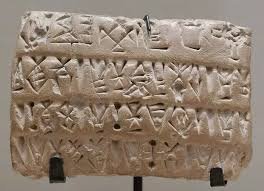
It is believed that accounting has been roaming around humanity ever since the age of ancient civilizations. Numerous history books have suggested that the early development of accountancy could be traced back to ancient Mesopotamia—literally, thousands of years ago. The invention of the first writing system—the cuneiform—flourished the idea of record-keeping for livestock, known today as accounting.

“Though the businessperson’s head has a hundred eyes, yet there are still not enough for all their duties.”
Fra Luca Bartolomeo de Pacioli, The Father of Accounting
Unfortunately, Luca Pacioli, acknowledged as the father of accounting was not the inventor. However, he was the first man who published a book on double-entry bookkeeping—Summa de Arithmetica, Geometria, Proportioni et Proportionalita—that gave way to the development of modern accounting used today.
Why choose accounting?
Well, for three reasons:

1. Job security. Business organizations never stop searching for accountants, which technically means it will always be in demand no matter what. This is due to the fact that only 7,000 to 8,000 accountants are being licensed every year and most of them look for work abroad thus, leading to a shortage of Filipino certified public accountants (CPAs) working in the Philippines.

2. Earn a decent amount of money. Having a profession in the field of business is one of the top 10 highest earning jobs in the Philippines. According to the Department of Labor and Employment (DOLE), accountants and auditors sit on the 8th spot earning an estimated average salary of P47,756 monthly; $64,387 or P3,230,396 annually abroad.

3. Countless opportunities. Accountancy is not constrained to merely doing accounting jobs. Once you have the CPA title, you can work in different fields such as auditing, tax accounting, government accounting, forensic accounting, IT security audit, accounting research, education, management accounting, financial accounting, cost accounting, and so much more.
 ABM Squad